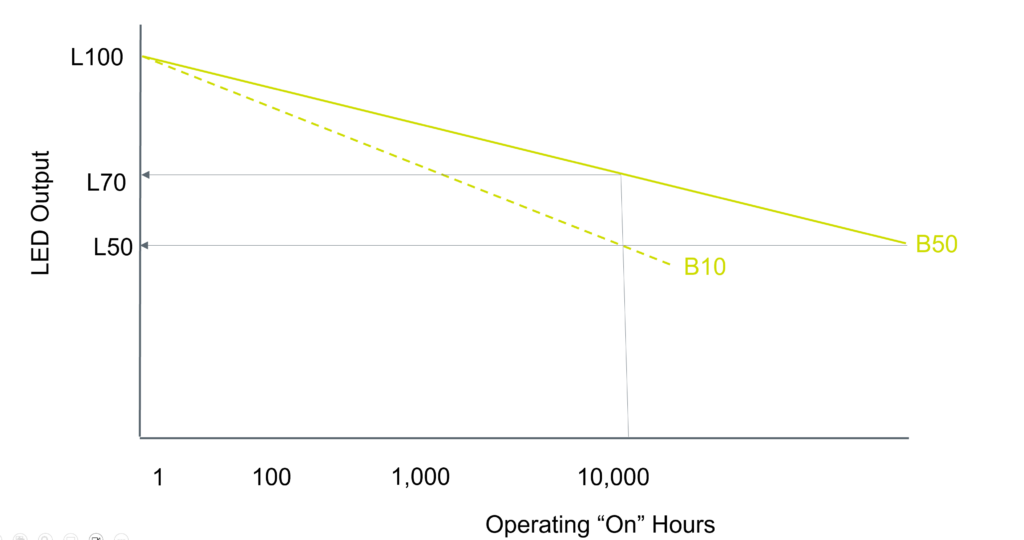
The adoption of UVC LEDs in water disinfection systems is rapidly gaining momentum, particularly in point-of-use (POU) and point-of-entry (POE) applications. As engineers and product designers transition from traditional low-pressure mercury lamps to this innovative technology, it’s crucial to reassess our approach to lifetime and reliability considerations. This shift requires a nuanced understanding of how UVC LEDs perform in different contexts and how to optimize their use for maximum efficiency and effectiveness.
Point-of-Use Systems: A New Paradigm in Water Disinfection
Point-of-use water disinfection systems, such as countertop or under-sink purifiers, are increasingly utilizing UVC LEDs designed to last up to 10 years without the need for annual lamp replacement. This longevity is a significant advancement over traditional UV lamps, which typically require yearly replacement to maintain disinfection efficacy.
One of the key advantages of UVC LEDs in POU systems is their on-demand operation capability. This feature, combined with other efficiency improvements, can result in up to 25% energy savings compared to previous models. The instant-on nature of LEDs eliminates the warm-up time required by mercury lamps, allowing for more precise and efficient disinfection cycles.
When designing POU systems with UVC LEDs, it’s important to consider the reliability data for the entire LED assembly rather than individual devices. A typical POU system might employ 2-5 LEDs, and the end-of-life point could be estimated at around 300 hours of operation, based on the product’s annual capacity and intended lifetime.
Point-of-Entry Systems: Scaling Up for Whole-House Disinfection
Point-of-entry systems, which treat water as it enters a building, present different challenges and considerations. These systems typically handle higher flow rates, ranging from 25 to 60 liters per minute, and are often designed to meet NSF 55 Class B disinfection standards.
POE systems generally use a larger number of UVC LEDs, typically between 10 to 30, depending on the specific design requirements. The expected lifetime for these systems is often in the range of 3-6 years, which translates to approximately 3,000 hours of operation at end-of-life.
Rethinking Lifetime Requirements
Traditional low-pressure germicidal lamps used in water purification systems often claim lifetimes of 8,000 to 10,000 hours. However, these figures can be misleading as they are typically achievable only under very specific conditions, such as continuous 24/7 operation with limited on/off cycling.
UVC LEDs, on the other hand, offer several advantages that challenge this conventional thinking about lifetime requirements:
- Cycling Durability: UVC LEDs can be cycled on and off tens of thousands of times with minimal impact on their degradation performance. This capability allows for more flexible and efficient operation patterns.
- Instant Full Output: Unlike mercury lamps that require warm-up time, UVC LEDs provide their full rated output almost instantly. This feature enables more precise control over disinfection cycles and can lead to significant energy savings.
- Tailored Operation: The ability to operate UVC LEDs on-demand means that their actual “on” time can be much lower than traditional lamps, potentially extending their effective lifetime in real-world applications.
Designing for Reliability and Performance
When incorporating UVC LEDs into water disinfection systems, several key factors should be considered.
End-of-life performance is crucial to evaluate, particularly the expected behavior of the LED population at the system’s end-of-life point. For a POU system with a 300-hour end-of-life, reliability data beyond this point can be disregarded. Similarly, for a POE system with a 3,000-hour end-of-life, the focus should be on data relevant to this timeframe.
Proper thermal management is paramount in sustaining LED reliability. Effective heat dissipation can significantly extend the operational life of UVC LEDs and maintain their disinfection efficacy over time. Without adequate thermal management, the performance and longevity of the LEDs can be severely compromised.
Sophisticated reactor designs can help water system designers achieve both performance and economic goals. Factors such as water flow patterns, LED placement, and reflective surfaces can optimize UV dose delivery and energy efficiency. These design considerations are essential for maximizing the effectiveness of the disinfection process.
When evaluating reliability, it is important to consider the entire LED assembly rather than individual devices. This system-level approach provides a more accurate picture of how the system will perform over its lifetime. It ensures that all components work harmoniously to deliver consistent and reliable disinfection.
Finally, ensuring that the system meets relevant standards, such as NSF 55 Class B for POU and POE applications, is essential. Regulatory compliance may influence design choices and LED specifications, ensuring that the system is both effective and safe for use.
A Paradigm Shift in Lifetime and Reliability
The transition from mercury-based UV lamps to UVC LEDs in water disinfection systems necessitates a paradigm shift in how we approach lifetime and reliability considerations. By understanding the unique characteristics of UVC LEDs, such as their cycling durability and instant-on capabilities, designers can create more efficient and effective water treatment solutions.
For both POU and POE applications, the focus should be on optimizing the system design to leverage the strengths of UVC LEDs while addressing their specific operational requirements. This approach not only ensures compliance with regulatory standards but also delivers superior performance and longevity compared to traditional UV lamp systems.
As the technology continues to evolve, we can expect further improvements in UVC LED efficiency and lifespan, making them an increasingly attractive option for water disinfection across various scales and applications. By rethinking our approach to lifetime and reliability, we can fully harness the potential of UVC LEDs to provide safe, clean water in a more sustainable and cost-effective manner.